
◀ All Offerings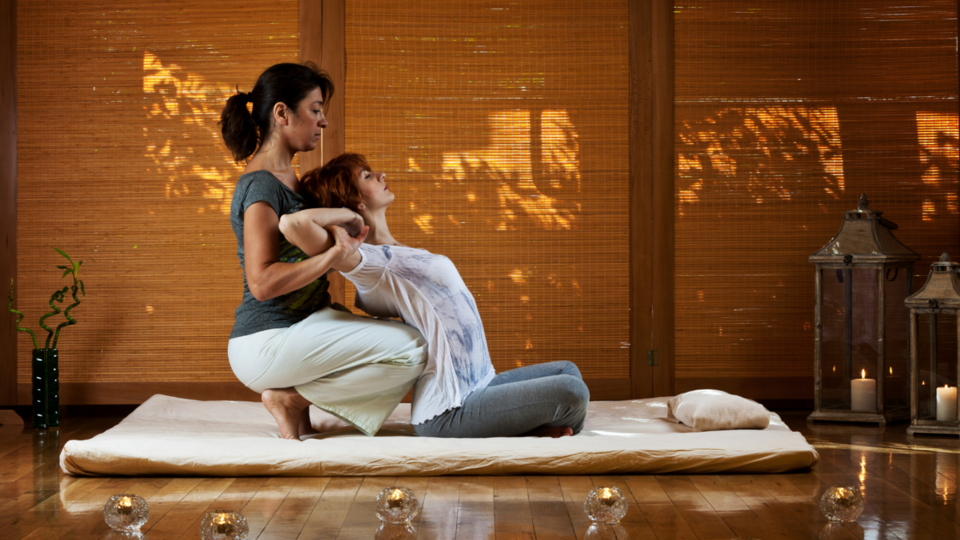
Precision Stretching That Works
Adaptive Release
PROFESSIONAL ASSISTED STRETCHING
Precision Stretching That Works
With Your Body's Mechanics.
Most people stretch consistently and still cannot resolve the same restrictions. That is because load application alone does not address the neuromuscular patterns driving the limitation. I use PNF techniques to reduce neuromuscular guarding and improve joint mechanics, addressing the mobility restrictions that drive postural compensation.
DOES THIS SOUNDS FAMILIAR
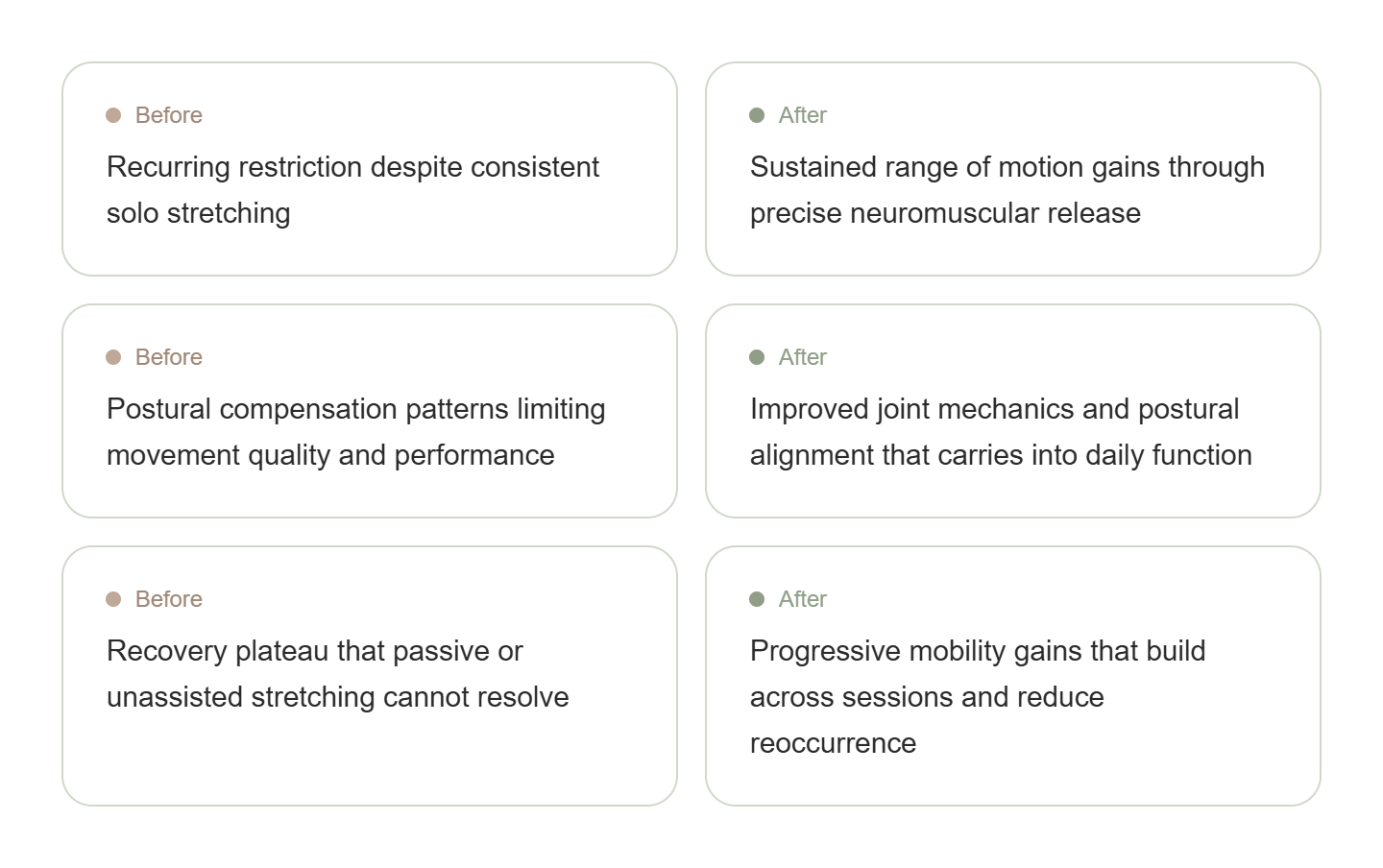
You stretch consistently but the same restrictions return. The mobility you gain in a session does not carry into your daily movement or training.
Or restriction is already limiting your output. Postural compensation from long hours of sitting, reduced joint range affecting athletic performance, or a recovery plateau that solo stretching cannot resolve.
Unaddressed compensation patterns become structurally reinforced over time. What presents as tightness today develops into chronic mechanical imbalance.
YOU NEED A GUIDE
I know how discouraging it is to put consistent effort into your recovery and still feel limited. In most cases the restriction is not simply a flexibility deficit. It is sustained neuromuscular guarding and passive tissue resistance that unassisted stretching cannot adequately address.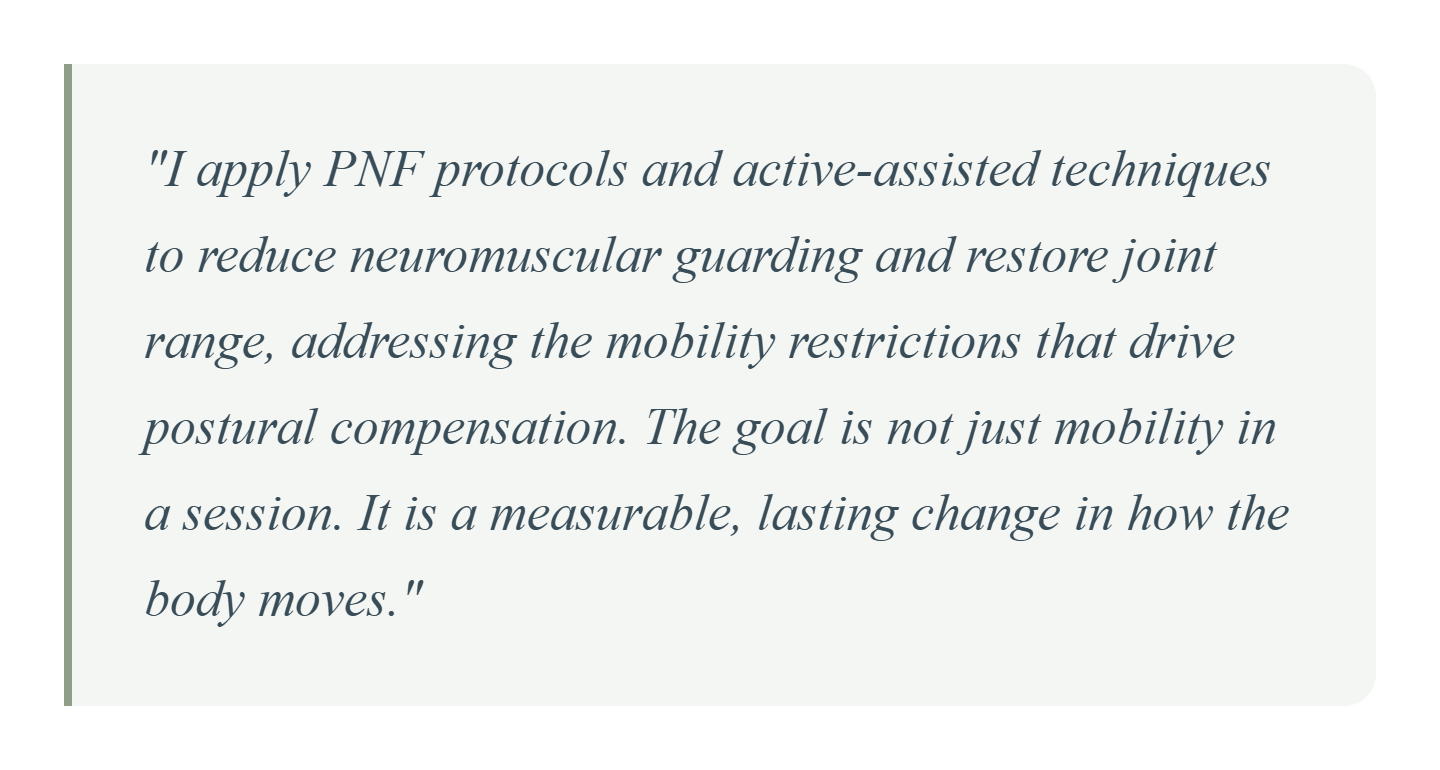
Each session combines passive stretching, active-assisted movement, and mobility-driven postural correction to address the compensation patterns holding you back at the source.
WHAT ACTUALLY CHANGES
HOW IT WORKS
Assess: I identify postural imbalances, active compensation patterns, and restricted joints to establish a clear clinical picture before any technique is applied.
Release: Using PNF protocols, passive stretching, and active-assisted movement, I apply structured techniques to reduce neuromuscular guarding and restore functional range at the affected joints.
Reassess: I reassess range, tissue response, and postural alignment to confirm measurable change and identify what to carry forward into the next session.
THE 60-MINUTE EXPERIENCE
Structural work and autonomic regulation, combined
The 60-minute session integrates the full protocol with a secondary layer of autonomic nervous system support. During the stretching portion, the table delivers carefully structured low-frequency sound waves through the body.
This vibroacoustic input supports muscle relaxation, circulation, and a reduction in sympathetic tone, creating conditions for deeper tissue responsiveness during the manual work.
To conclude, you choose one of two integration methods.
THIS IS FOR YOU IF...
✅ You feel stuck in your own body despite regular movement, stretch or exercise
✅ You sit for long hours and feel the postural cost by end of day
✅ Flexibility is limiting your training, sports performance, or daily comfort
✅ You want results that hold, not just temporary relief that fades by the next morning
WHY CONSISTENCY COMPOUNDS
Progressive neuromuscular adaptation
Each session builds on the last. As neuromuscular guarding decreases across sessions, tissue responsiveness improves and range of motion gains accumulate rather than reset.
Compensation pattern correction
Addressing the same imbalances consistently prevents the structural reinforcement of compensation patterns, supporting long-term joint health and movement quality.
Maintained functional range
Regular sessions sustain the mechanical improvements made in each visit. For athletes and desk-bound professionals alike, your daily environment continuously reintroduces the same postural load. Consistent work reduces the likelihood of compensation patterns relapsing
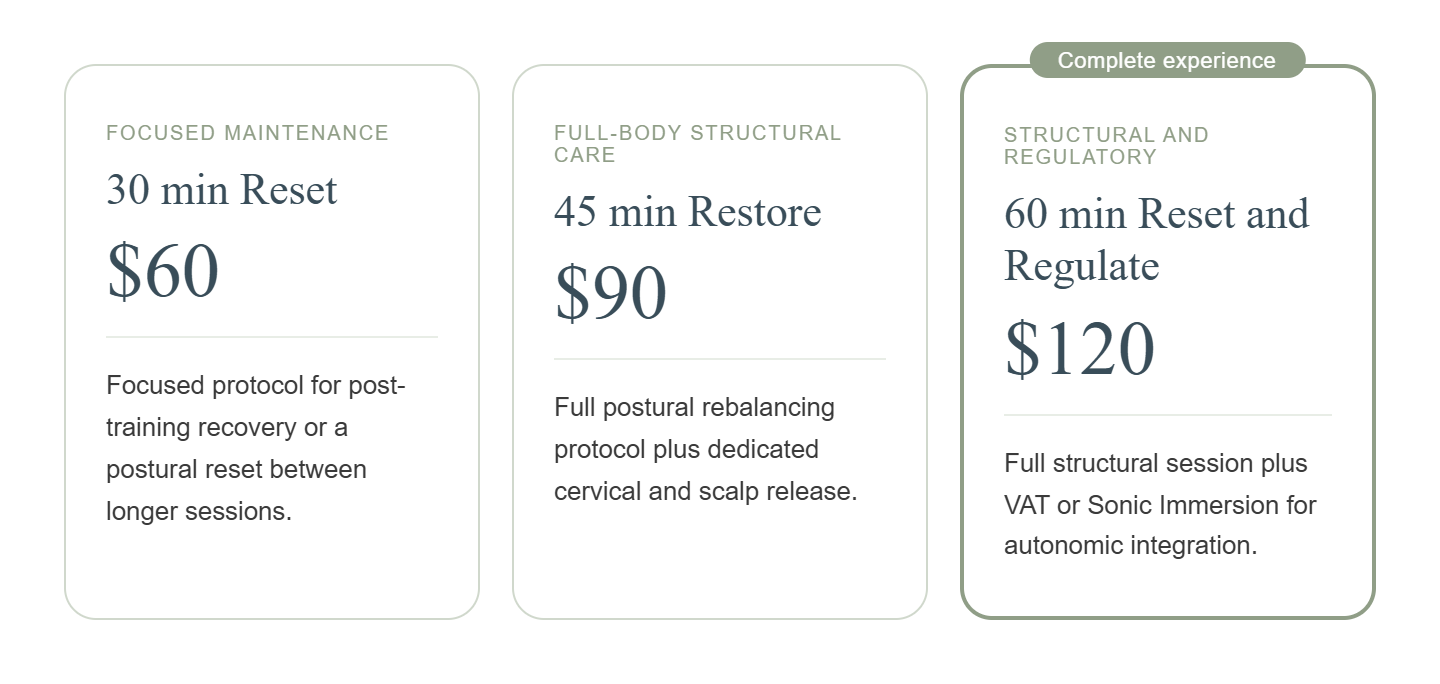
CHOOSE YOUR LEVEL OF CARE
Stretching Works Better When It is Not On You
Whether you are managing desk fatigue, training for performance, or simply ready to stop fighting your own body, I will help you find the right session and get you scheduled.
Share this

© 2026 Realign Balance Therapies